Anglo-Saxon Broken Back Seax
Coppergate, York · Multi-bar pattern weld
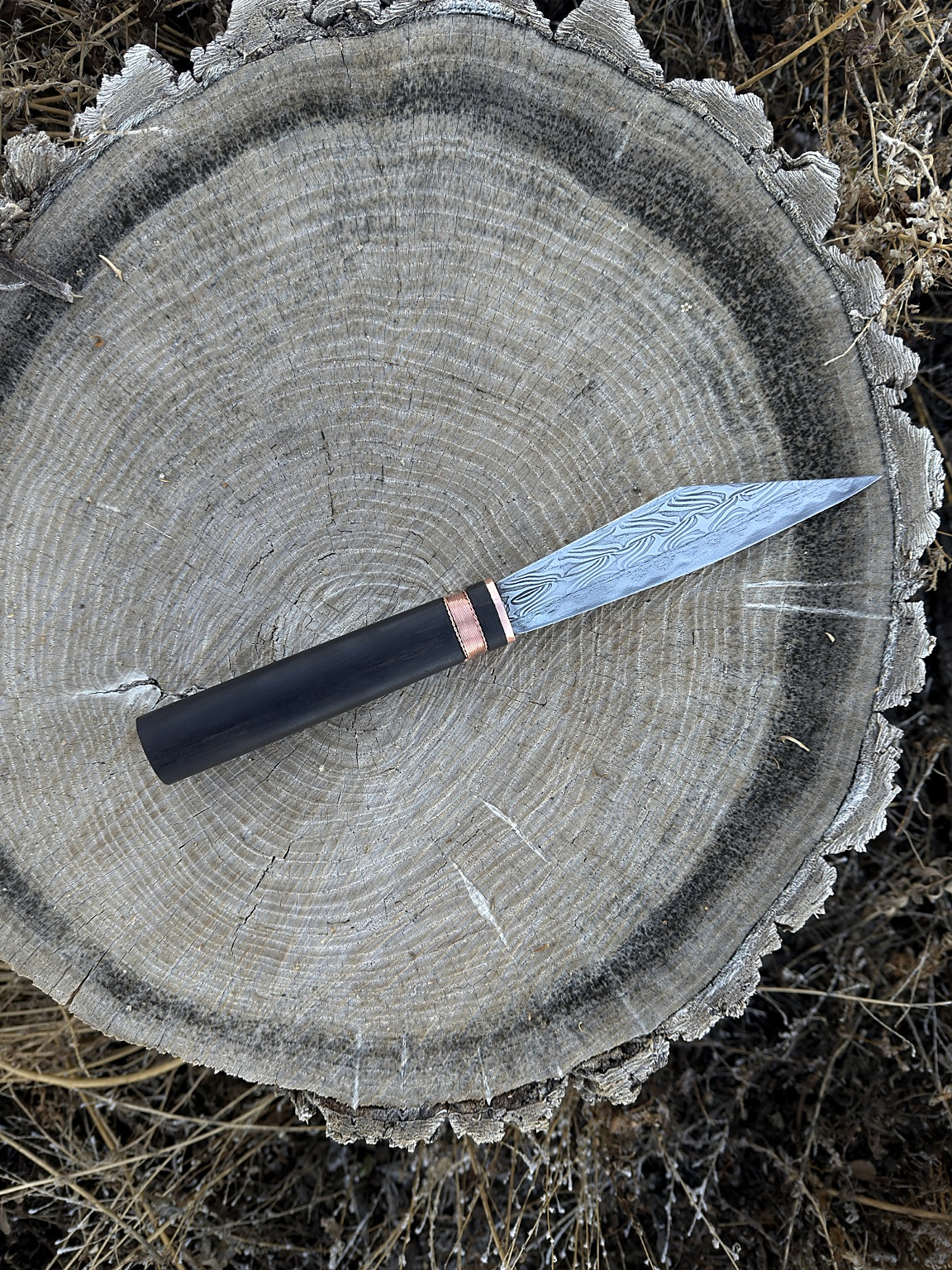
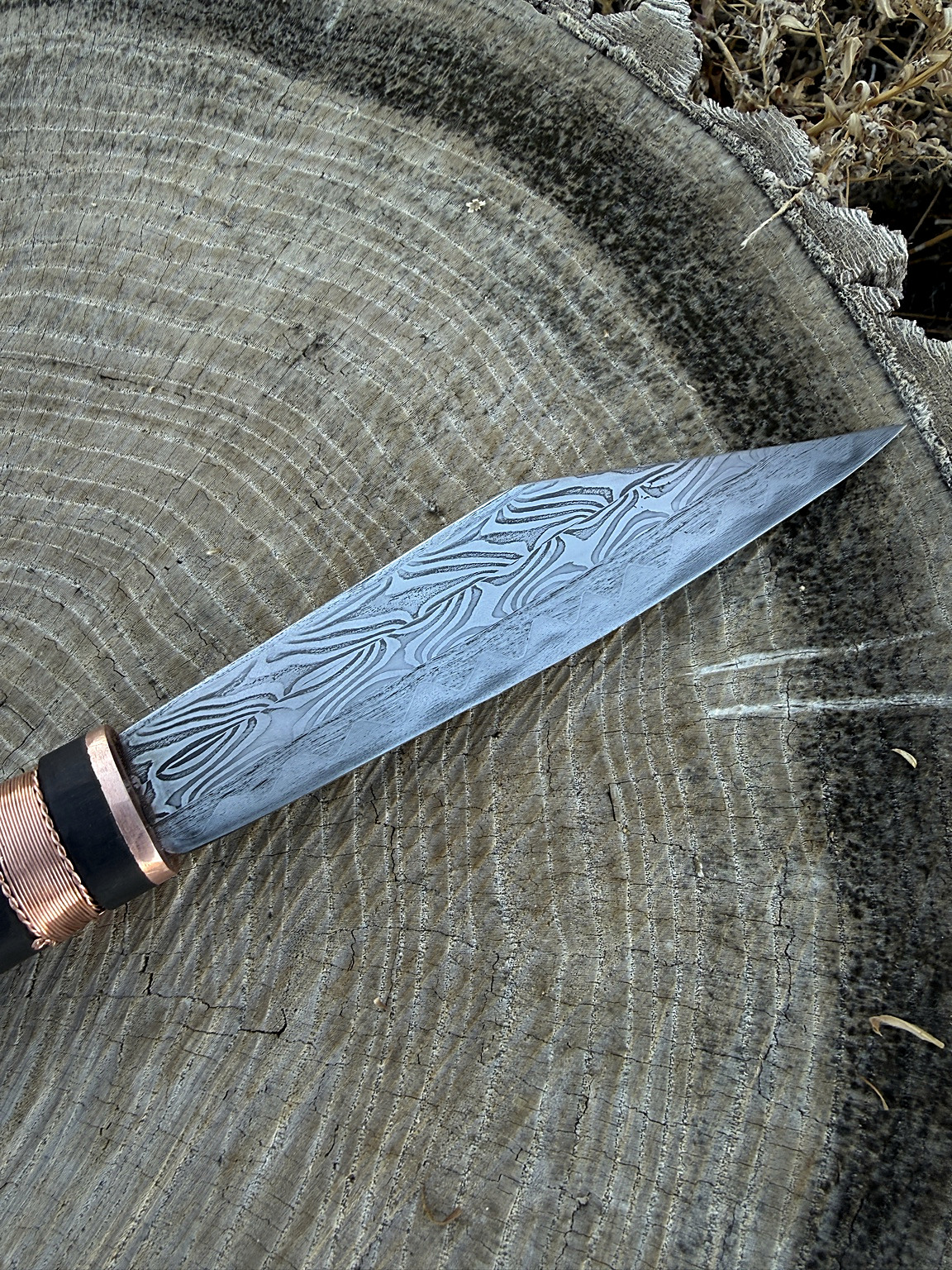
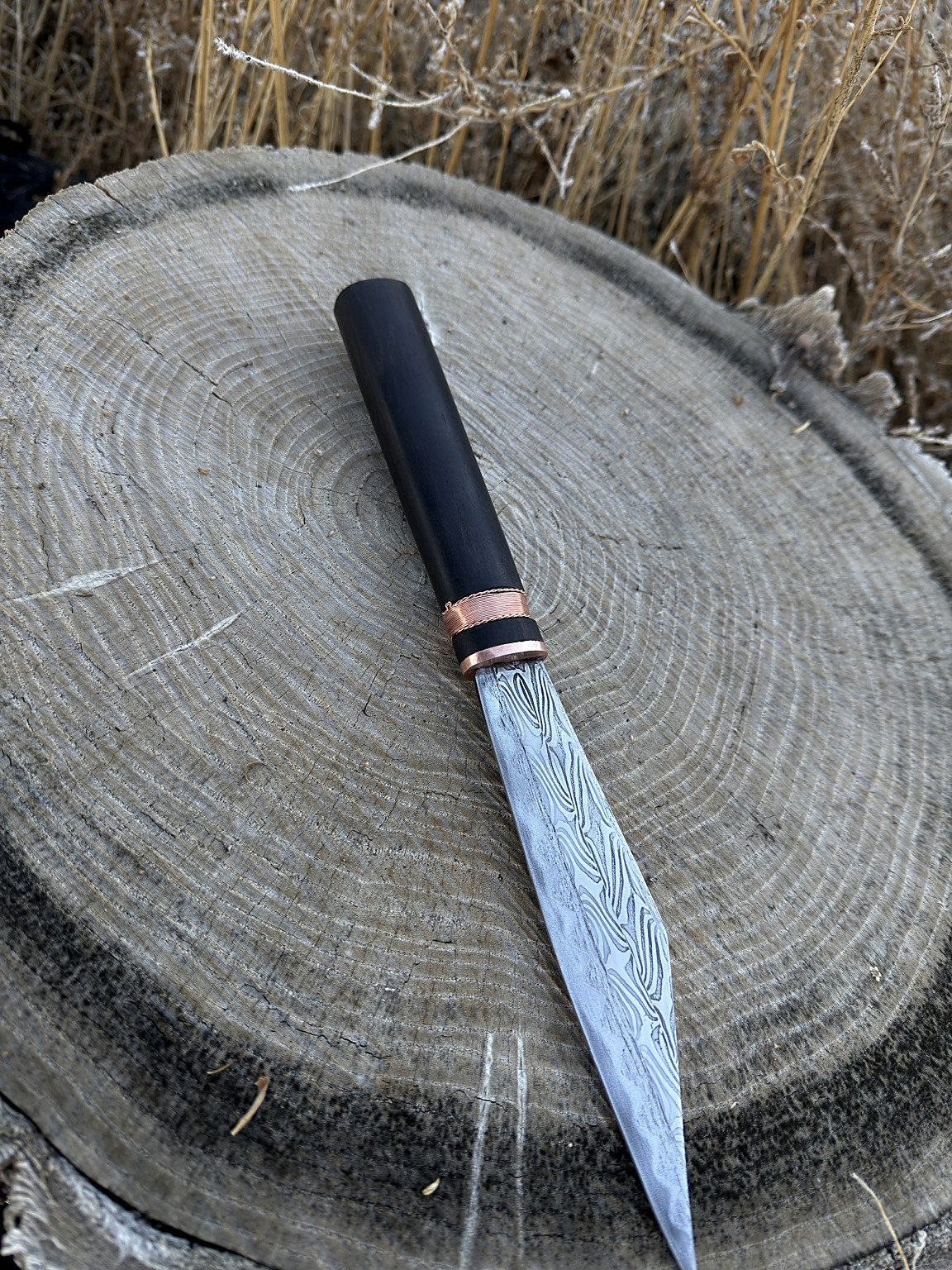
About this piece
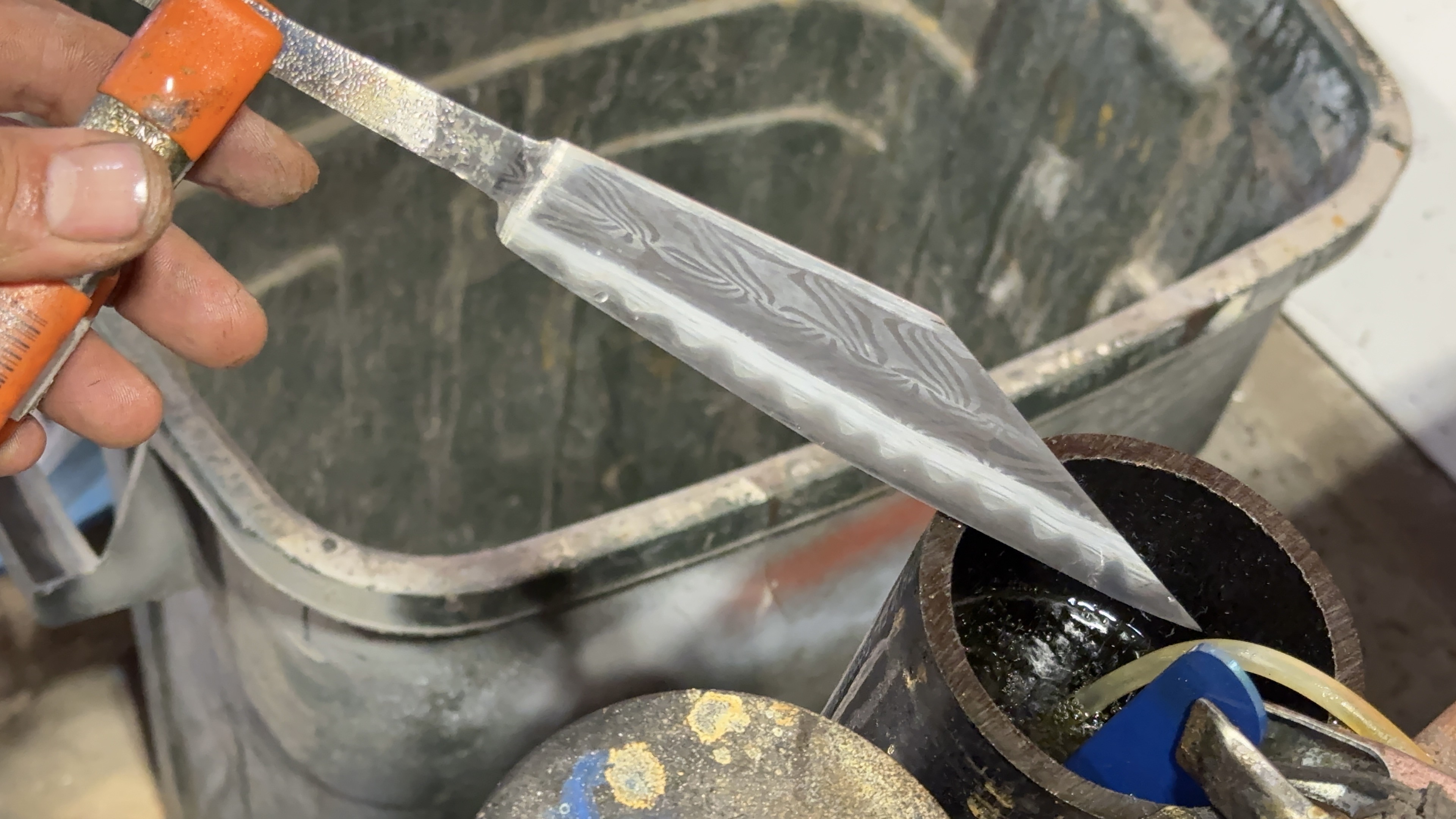
This broken-back seax explores Anglo-Scandinavian composite blade construction through a wrought-iron spine, an opposing-twist pattern-welded core, and a filed, interlocking wolf-tooth weld joining wrought iron to the high-carbon steel edge. The finished blade has an approximately 5 mm spine, an African blackwood handle, copper fittings and wirework, and a decorated leather scabbard.
Historical basis
The blade's profile was informed by knives recovered at 16–22 Coppergate, York, particularly catalogue numbers 2764 and 2765 in Patrick Ottaway's published study. Both belong to the site's Period 3 assemblage. These are comparisons for form, not direct models for the elaborate pattern-welded construction of this seax.
Knife 2764 has an 83 mm blade, 17 mm wide and 5 mm thick, with an angled back and a groove on each blade face. Knife 2765 has a 68 mm blade, 13 mm wide and 4 mm thick, with a similarly angled back, chamfered edges, and traces of a wooden handle on the tang. Both are illustrated in Ottaway's Fig. 227.
Metallographic analysis of knife 2765 found a composite construction with an iron back and welded steel cutting edge, including carbon diffusion at the weld and a hardened martensitic edge. More elaborate Coppergate pattern welding is documented on knife 2756 (Plate XLIX). This project combines lessons from several archaeological examples; it should not be understood as an exact replica of any one find.
Construction record
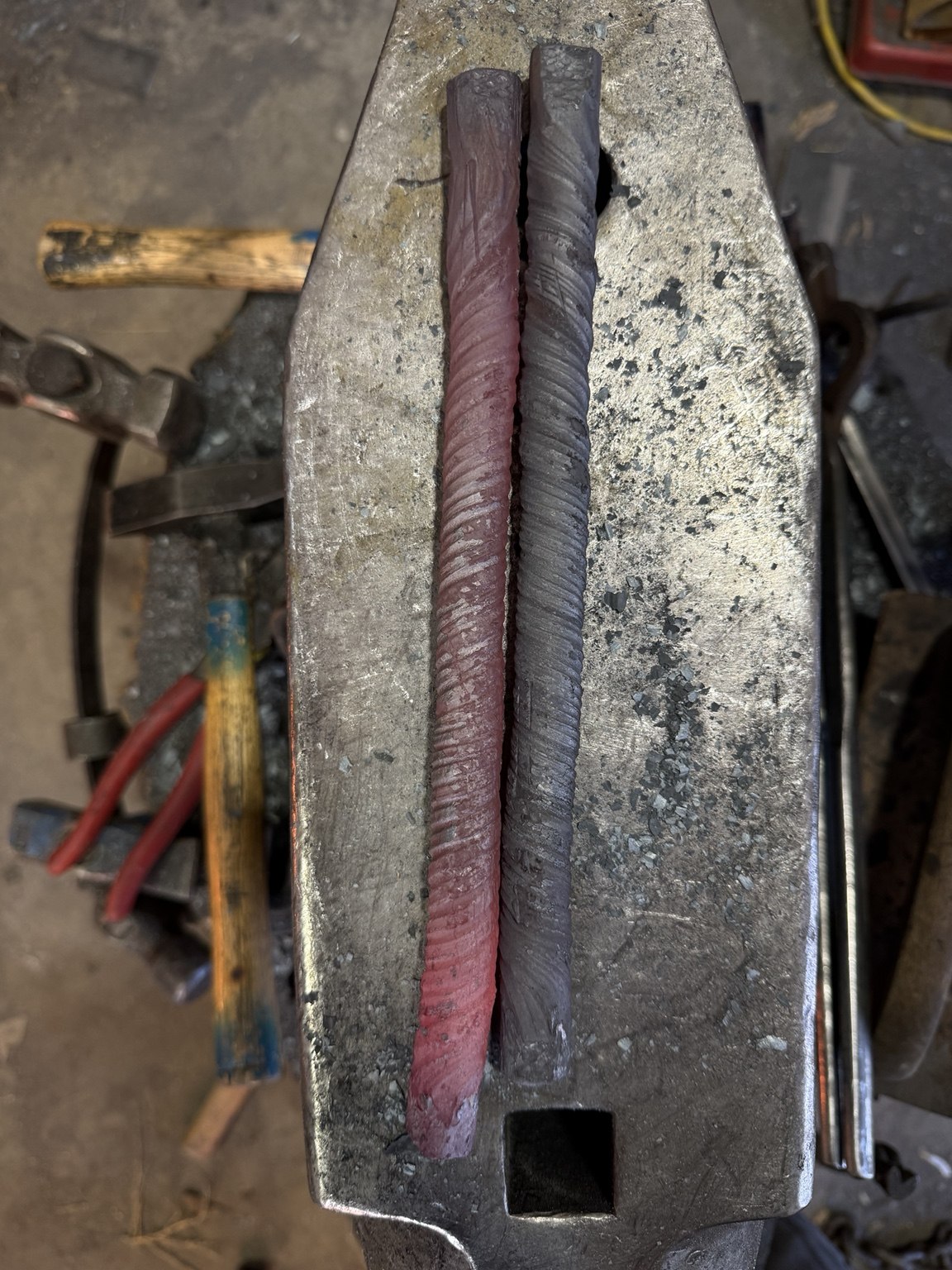
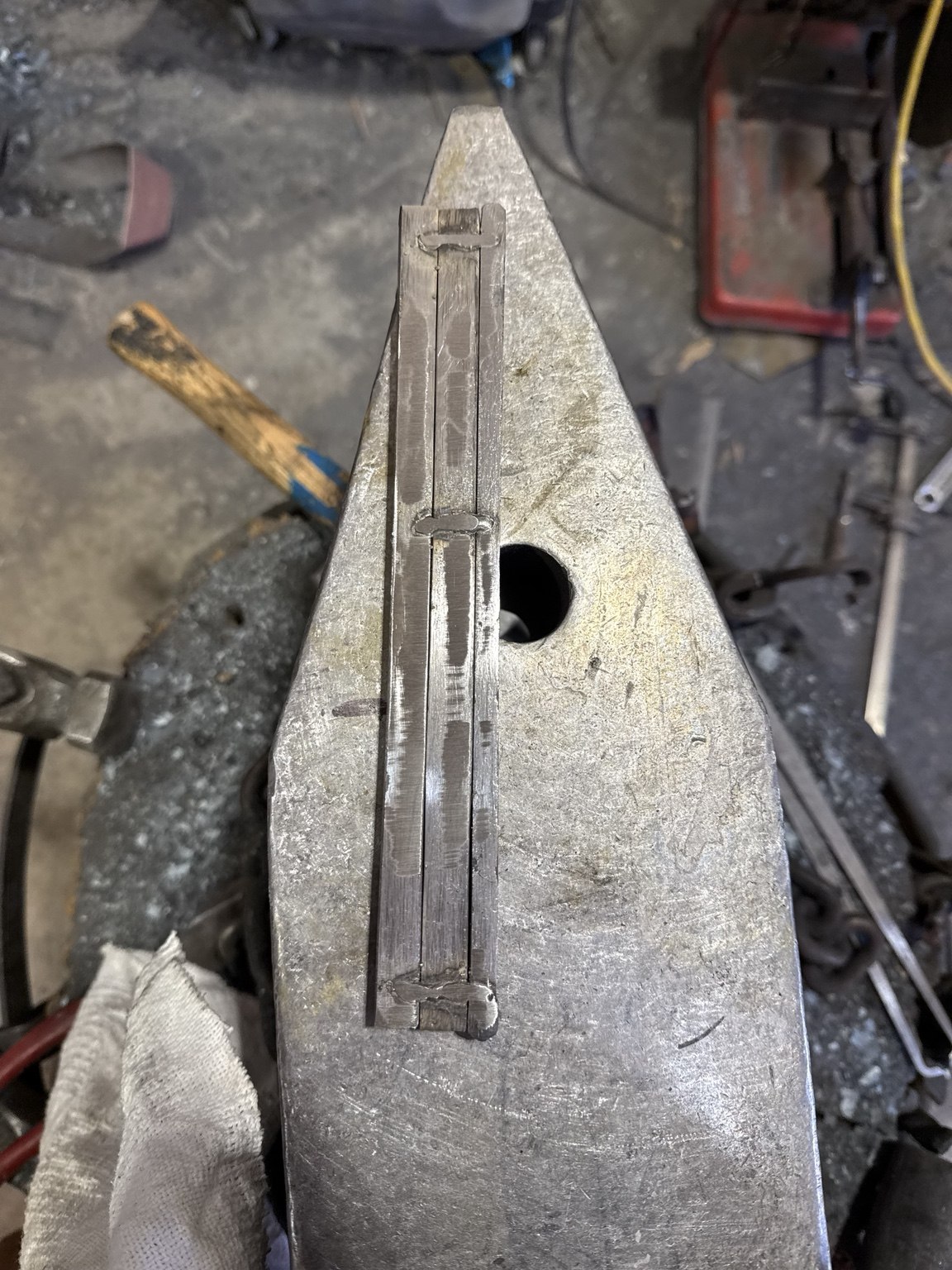
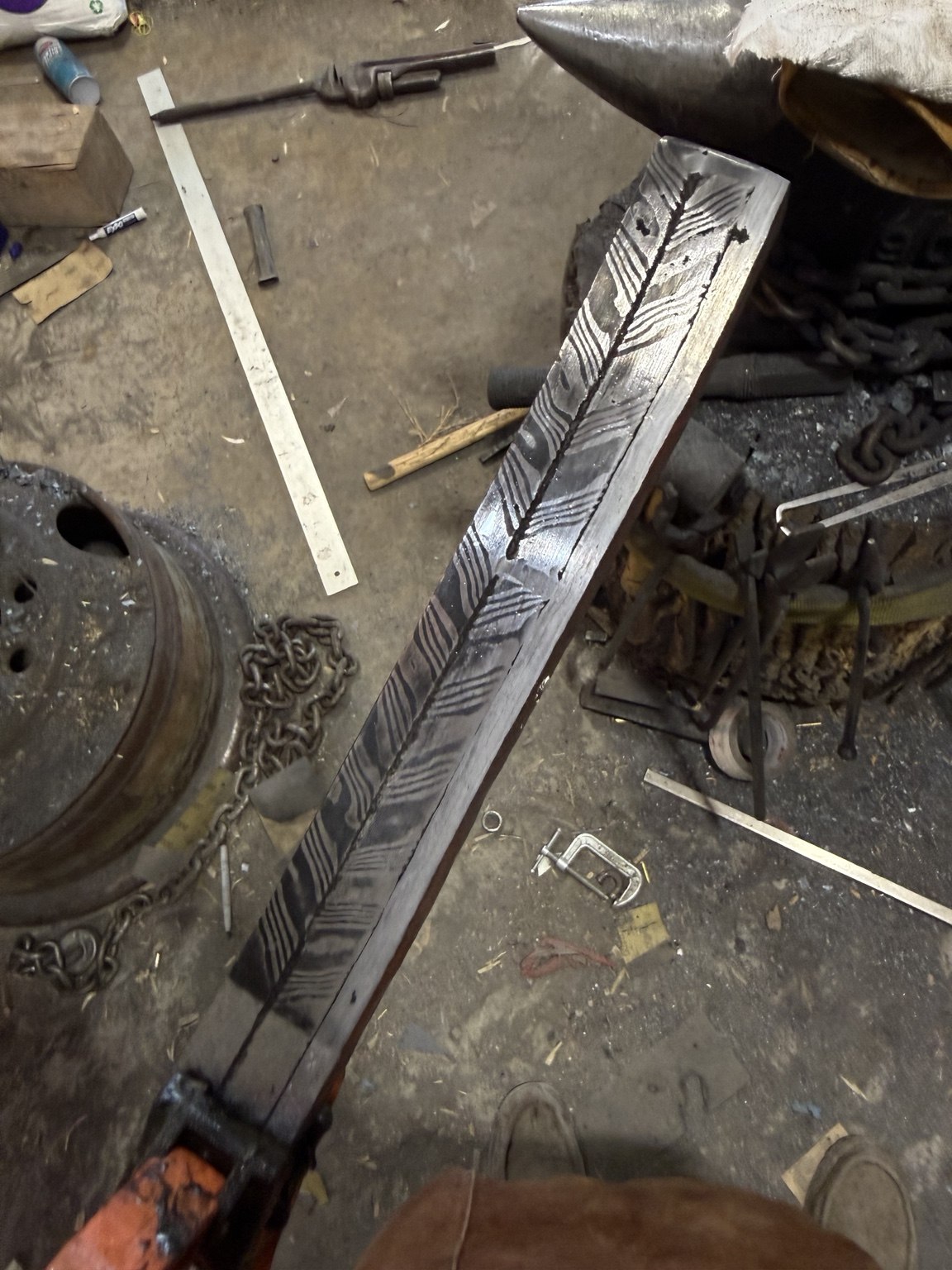
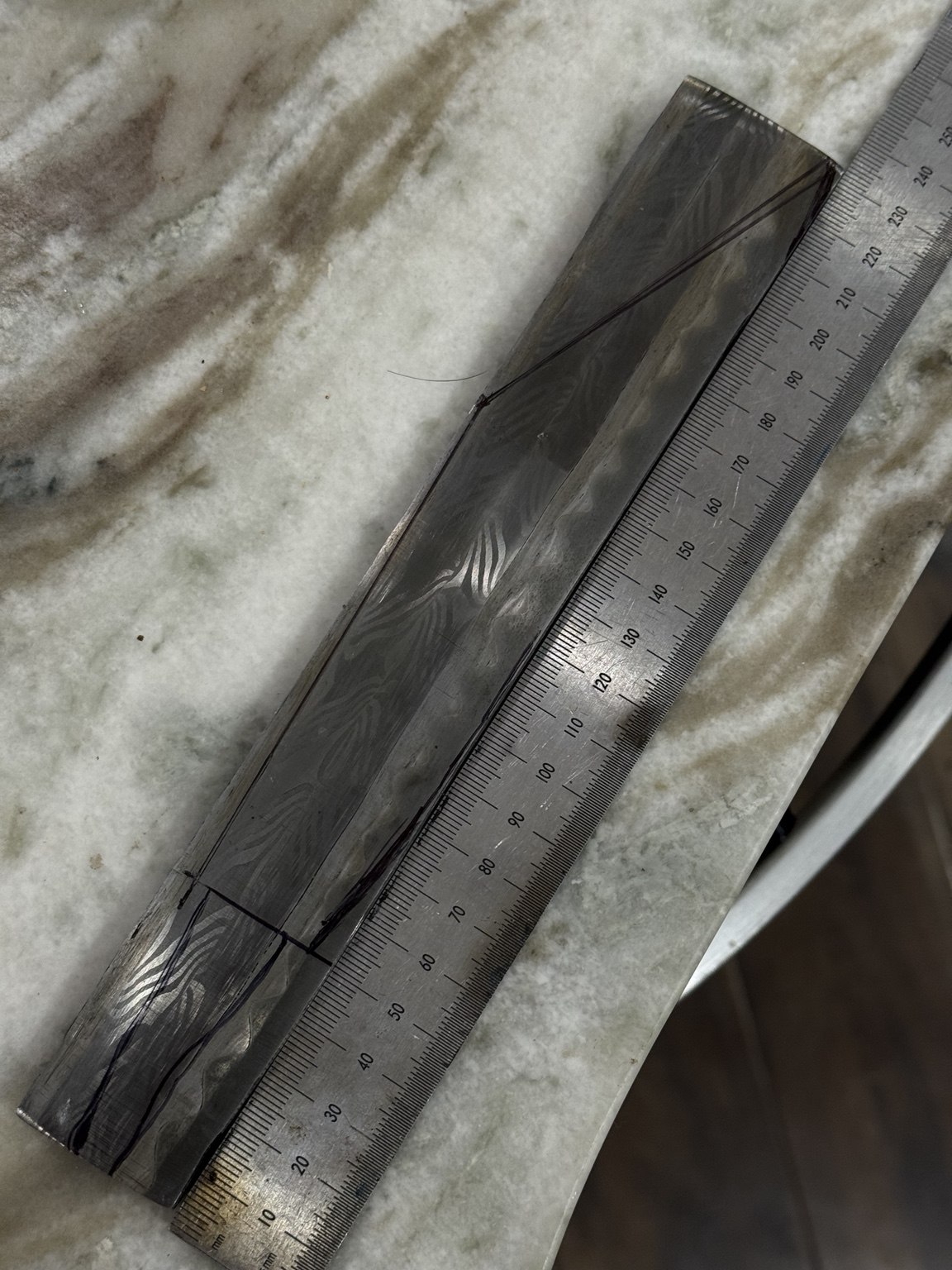
Two separate nine-layer billets of alternating 1075 and 15N20 were forge-welded and twisted in opposite directions. They were arranged together to produce a mirrored, herringbone-like core pattern, then joined with wrought iron to form the main assembly.
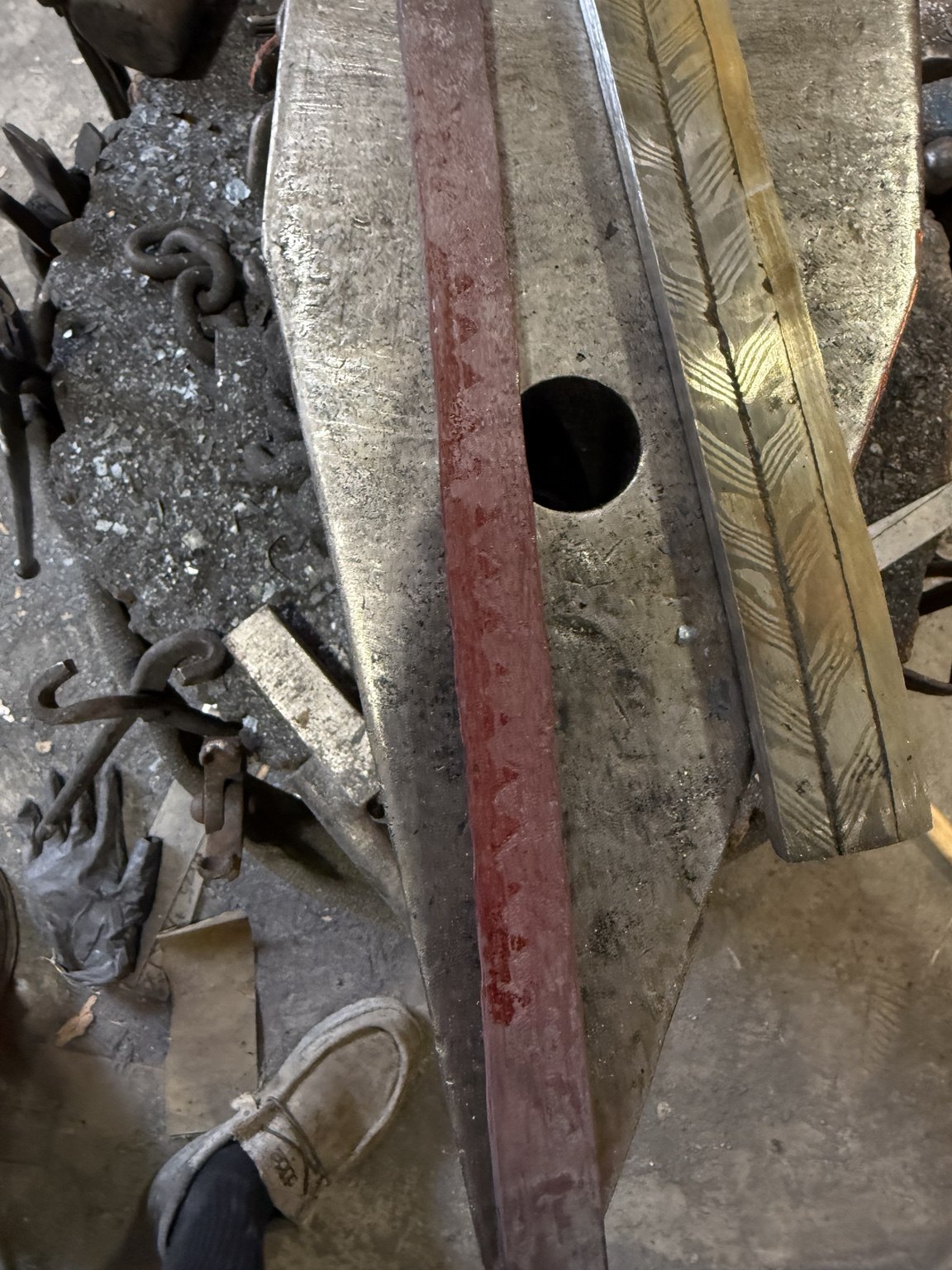
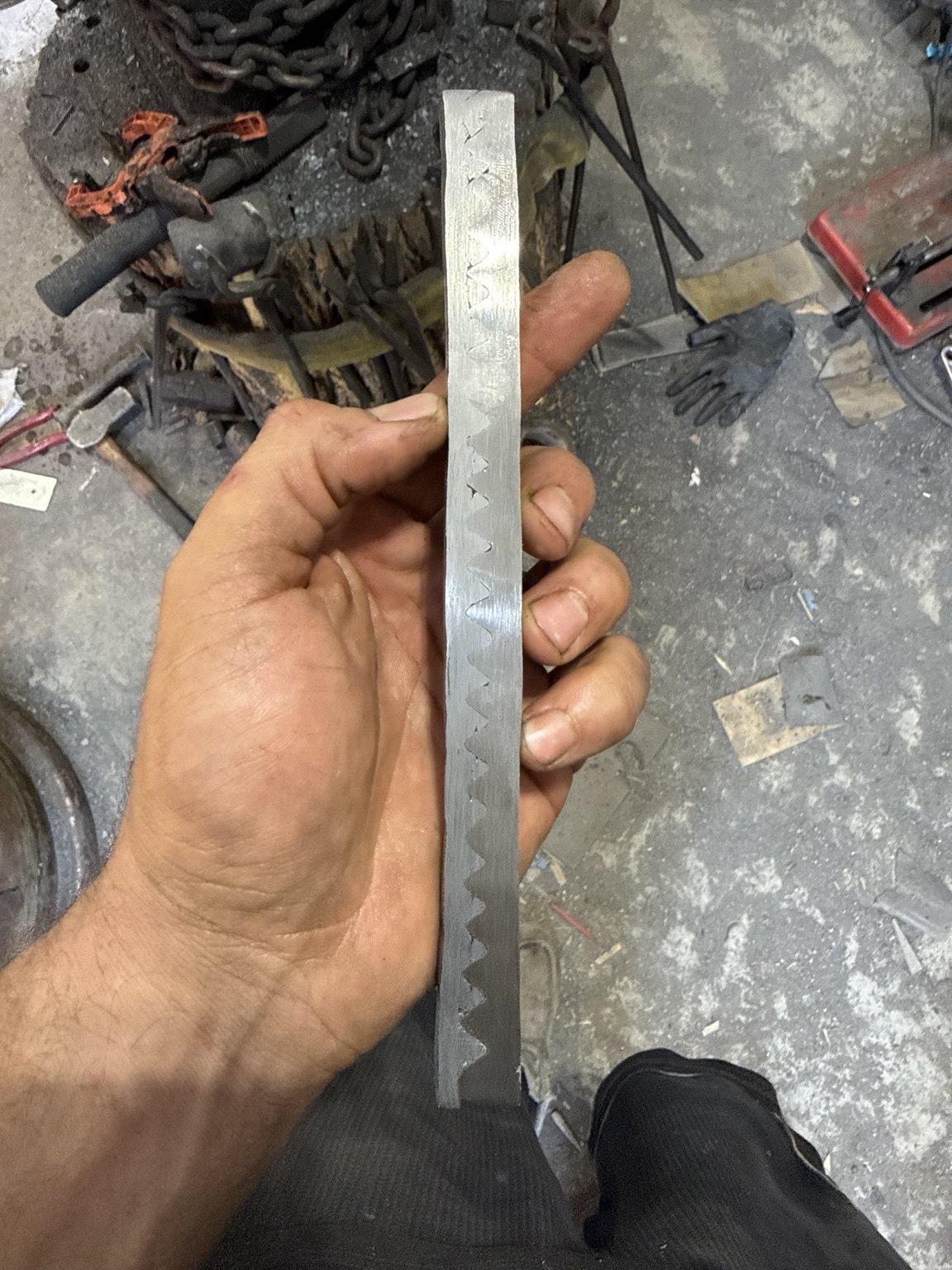
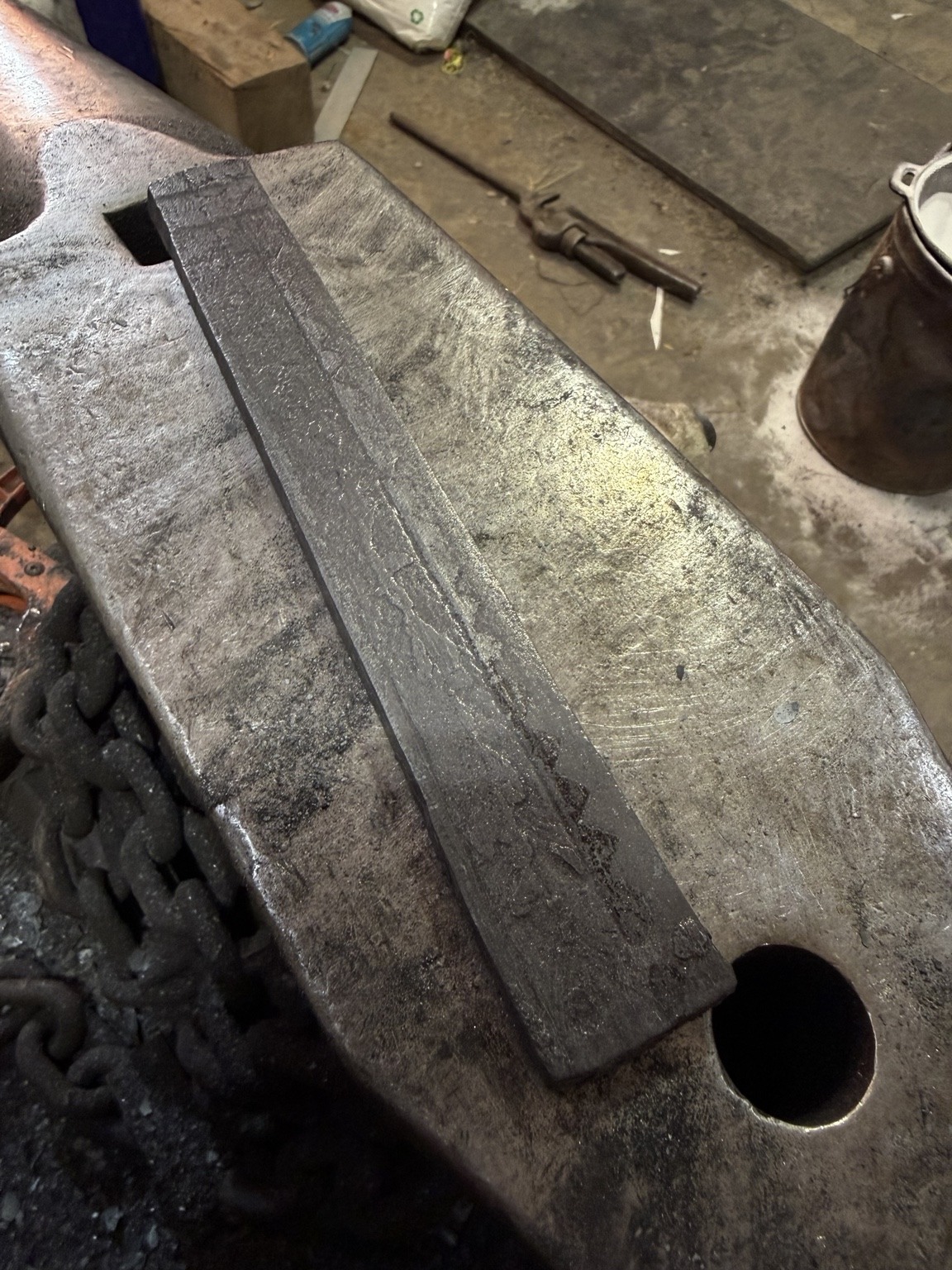
For the wolf-tooth joint, I filed matching teeth into both the wrought iron and the 1084 steel, fitted the two components together, and forge-welded them. I chose filing rather than forging the teeth into shape because my hammer control at the time was not yet consistent enough for the result I wanted. The etched joint reveals the interlocking pattern.
Once all components were welded together, I cut the blade profile from the billet rather than forging the final shape. This was a deliberate choice to avoid distorting the twisted core and wolf-tooth patterns. The blade was then cleaned, ground, heat-treated, polished, and etched to reveal its construction.
The planned construction required 22 forge-welding operations: nine for each twisted billet (18), one joining the twists, one attaching the wrought-iron spine, one making the wolf-tooth joint, and one joining that assembly to the remainder of the blade. This is a workshop count of operations, not a claim that each individual layer interface was welded in a separate heat. Delaminations and restarts added to the practical challenge of the build.
Dimensions: Spine thickness approximately 5 mm. Final blade length and width were not recorded before the finished knife went to its new owner; archaeological dimensions above belong to the original Coppergate finds.
Workshop photographs
Eight photographs from the workshop trace the construction from opposing twisted bars through the wolf-tooth weld, profile layout, and shaped blade. These document my process rather than a step-by-step account of a specific archaeological find.
References
Ottaway, P. (1989). Anglo-Scandinavian ironwork from 16–22 Coppergate, York, c. 850–1100 A.D. [Doctoral thesis, University of York].
Ottaway, P. (1992). Anglo-Scandinavian ironwork from 16–22 Coppergate (The Archaeology of York, Vol. 17, Fasc. 6). Council for British Archaeology.
Relevant comparisons include catalogue entries 2764–2765 (Fig. 227) and metallographic discussion of knives 2756 and 2765. These finds are comparative evidence, not exact models for this reconstruction.